
Stone inlay work adds an incredible dimension to woodworking, incorporating colors, designs, and creativity not attainable with wood alone.
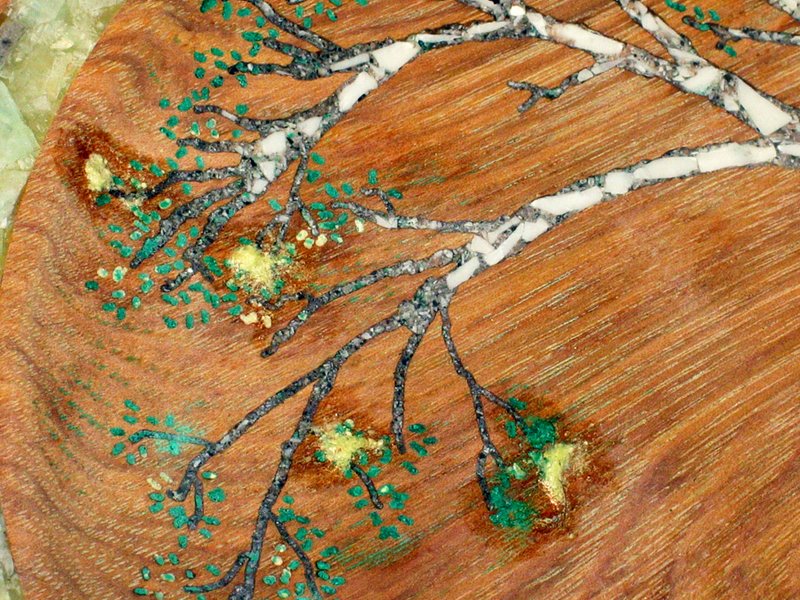
You can see the twig section already completed, and work starting on the green malachite needles. I did them separately in order to keep the colors separate.
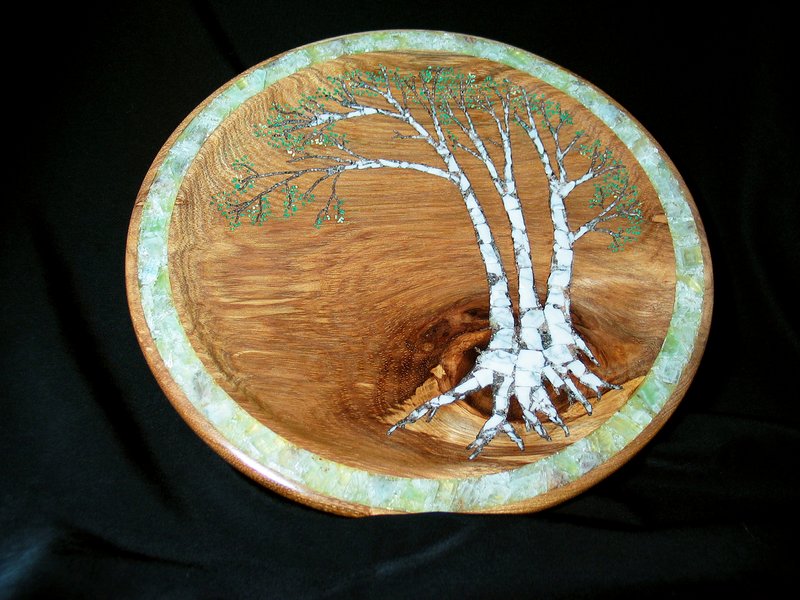
Next, I grind the stone flush with the wood, using the kind of abrasives a stone cutter might use. Progressing to finer and finer grits, I can get the stone surface to an almost glass-like luster. This process takes a lot of time, especially in the finishing stages, but the results are rather spectacular. It is easy to ding the wood surface when grinding, and this step takes a lot of extra care, especially if the mineral is hard.
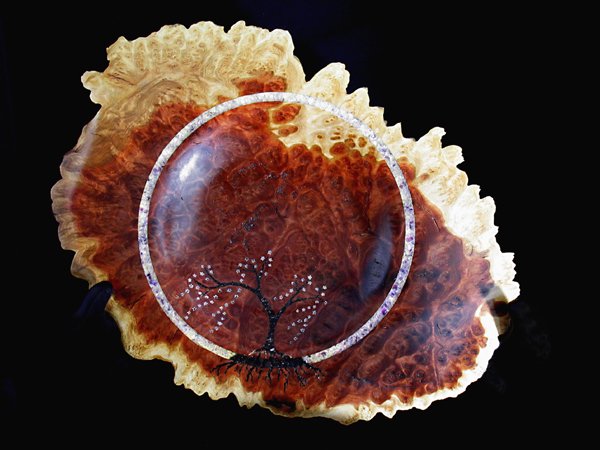
Here is a shot of a piece, with very intricate blossoms, with a technique I call "burl framing" because I start with a gorgeous burl as the base material.

I am experimenting with mixing various minerals together to create eye-popping contrasts. In this piece, (#2007-718 [SOLD]) I experimented with metallic gold leaf, applying it beneath the stone inlay as a first step. This is because the green Calcite is almost transparent, and I wanted to really kick up the color and brilliance. It is quite stunning against the dark-stained walnut. You should see it when the sun hits it. This plate would make a great corporate gift!